DevOps services: deployments you don’t fear, rollbacks in one step
We set up your servers, deployment pipeline, backups and monitoring so every release is repeatable — and if something breaks, the previous version is back in seconds.
Our DevOps services are for teams that are tired of every release feeling like a gamble. We set up your servers, build deployment automation with GitHub Actions and check every release with a health check; if the new version doesn’t come up healthy, the system rolls back on its own. Backups, TLS, logging and monitoring are part of the work from day one — not something you scramble to add after the first outage.
We run the same playbook on our own products. This site — Next.js and NestJS — is self-hosted and ships through scripted deploys with a health check and rollback, while Caddy issues and renews TLS certificates automatically. Hamdor takes a backup before every deploy and rolls back automatically on failure. Paradise Desk is self-hosted too and keeps previous builds on hand for instant rollback.
Vercel and similar platforms are excellent for getting started: no servers to maintain and a preview for every branch. But as traffic grows, or you need long-running backends, WebSockets, queues and cron jobs, or reliable reach in regions where those platforms are restricted, cost and limits climb. Your own cloud or local server with Docker, Caddy and PM2 or systemd gives full control — and we make that call with you based on real requirements.
What we build
Server setup
Cloud or local servers with least-privilege users, a firewall, key-only SSH, Caddy with automatic TLS, and services managed by PM2 or systemd.
CI/CD and deployment automation
GitHub Actions pipelines that test, build and ship, with health checks and automatic rollback that stop a bad release from sticking.
Self-hosting Next.js and migrating from Vercel
Move Next.js and your API onto your own server while keeping caching, images, environment variables and routes intact, without noticeable downtime.
Docker and reproducible environments
Containerize the app, database and Redis so development, staging and production match and rebuilding a server is routine.
Backups and server security
Automated MongoDB and PostgreSQL backups with restore drills, security patching, secrets management and hardened headers.
Monitoring and website maintenance
Health checks, centralized logs and alerts, plus ongoing upkeep: dependency updates, bug fixes and performance work.
How we work
- 01
Audit what you have
We review infrastructure, release process, backups and single points of failure, and hand you a prioritized risk list.
- 02
Design the target setup
We decide where things run, what gets containerized, and how staging and production are separated.
- 03
Automate and migrate
We build the CI/CD pipeline, deploy scripts with health check and rollback, and pre-deploy backups, then migrate in stages.
- 04
Monitor and hand over
We switch on monitoring and alerts, actually rehearse a restore from backup, and leave your team a runbook.
Related work

Hamdor
Game night with friends, wherever you are.
- Game
- Mobile app
- Web app or website
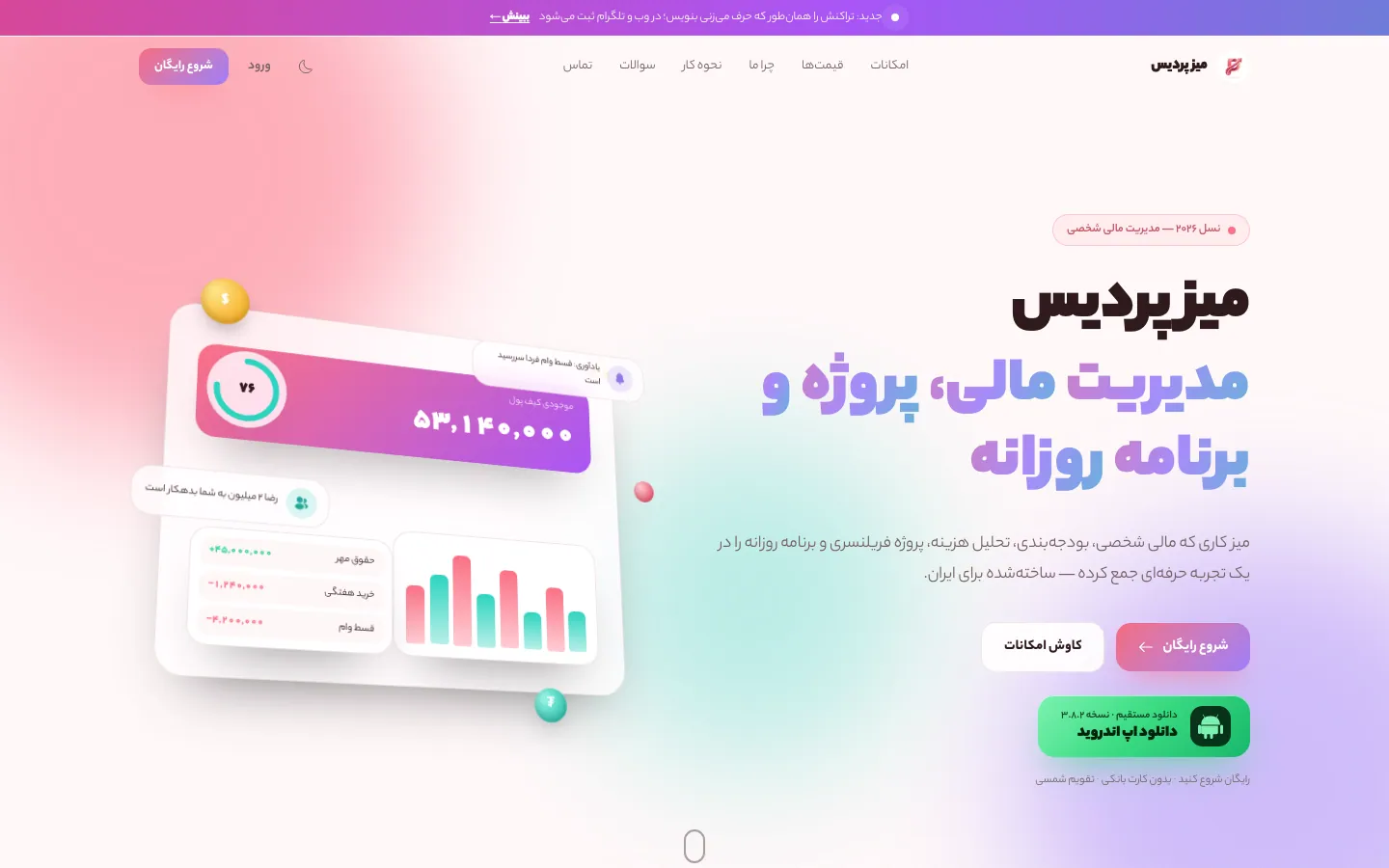
Paradise Desk
Money, projects and your day — in your own language.
- Web app or website
- Mobile app
- AI & automation
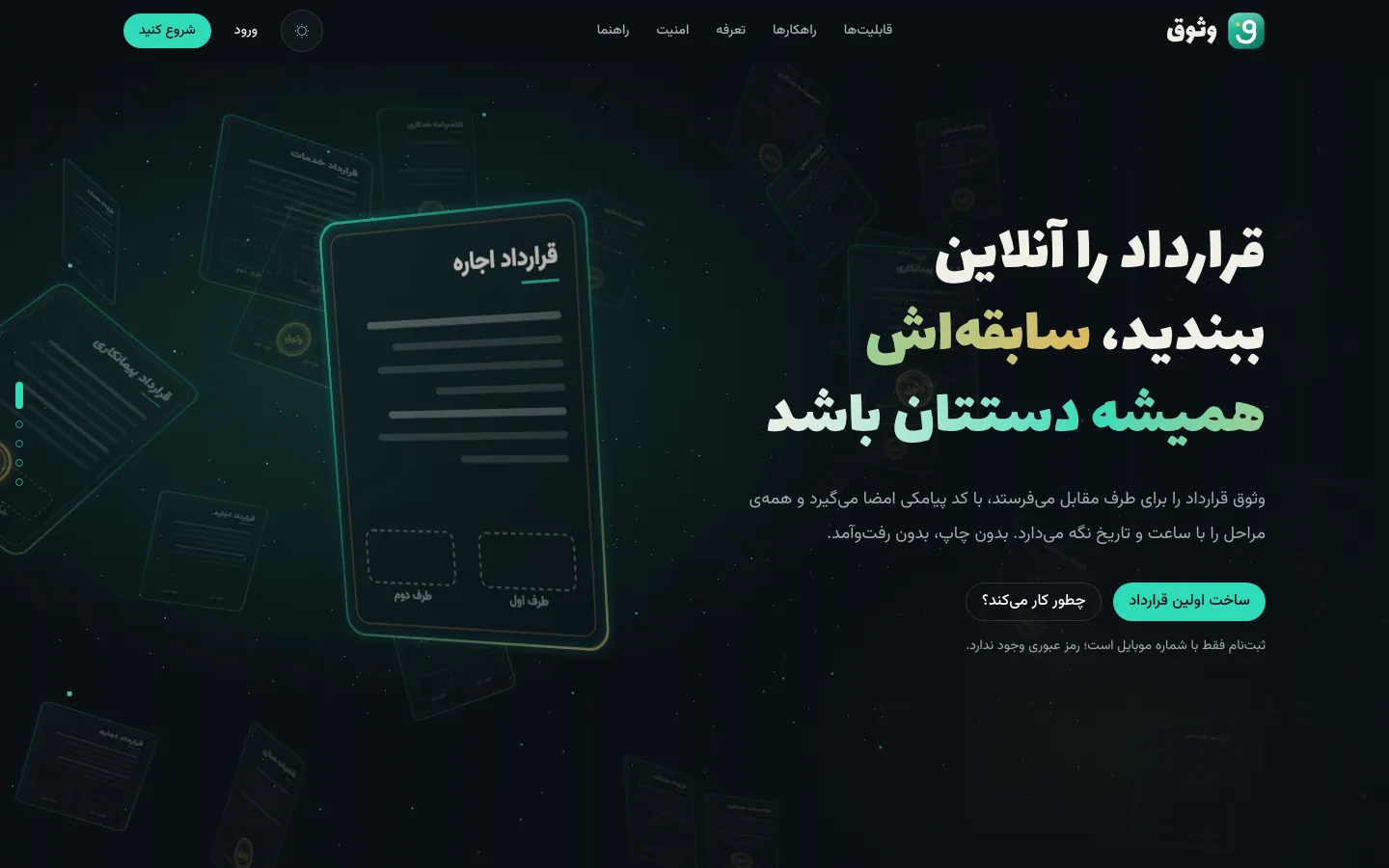
Vosugh
Sign contracts online and keep the record forever.
- Web app or website
- Infrastructure & DevOps
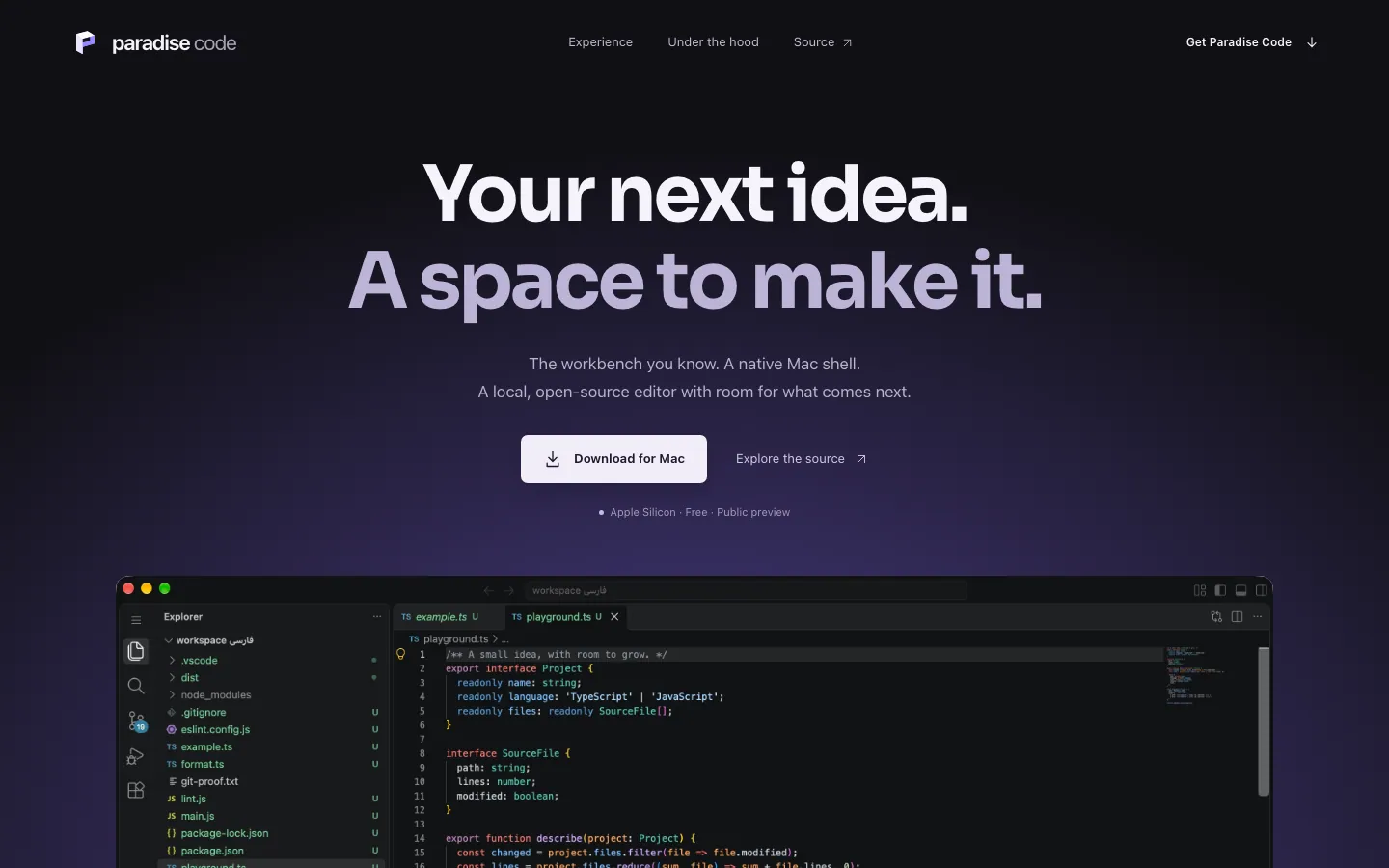
Paradise Code Editor
Your next idea starts here.
- Infrastructure & DevOps
- Product design
What drives the cost?
DevOps and hosting cost depends on where your infrastructure is today and how much reliability you need. After an initial review we split the work into defined pieces and estimate each.
- Number of services, databases and environments (dev, staging, production)
- Migrating from Vercel or shared hosting versus setting up from scratch
- Required availability and whether deployments must be zero-downtime
- Data volume and how long backups must be kept and how fast restored
- A one-off project versus an ongoing website maintenance retainer
Frequently asked questions
Is Vercel or self-hosting Next.js on our own server the better choice?
Both have a place. Vercel means no servers to maintain and a preview per branch, which is ideal for low-traffic sites or teams without infrastructure skills. Self-hosting makes sense once traffic and bills grow, you need long-running backends, WebSockets, queues or cron, data must stay on your infrastructure, or users in some regions reach those platforms unreliably. Next.js runs perfectly well on your own server in standalone mode behind Caddy with PM2 or Docker — the part that matters is a proper deploy pipeline and backups.
How long does it take to migrate from Vercel, and what are the risks?
It depends on how many services you run and how much you rely on Vercel-specific features such as Edge Middleware, ISR, image optimization and cron; we give a concrete estimate after reviewing the project. Those features are the main risk, since each needs an equivalent on the server. We migrate in stages: the full stack comes up on the new server under a test domain and gets tested, then DNS switches over, and Vercel stays live until you are confident, so rolling back is always possible.
What does CI/CD and deployment automation give a small team?
In a small team, usually one person knows how the site gets deployed, and that person is a single point of failure. With CI/CD every change pushed to GitHub is tested, built and shipped automatically, and no step depends on anyone’s memory. When deployment automation includes a health check and rollback, a bad release reverts in seconds and the fear of shipping disappears. Teams then ship smaller, more frequent changes, each carrying less risk.
What do your DevOps services and website maintenance include?
Maintenance is more than keeping a server switched on. It covers OS and dependency security updates, health monitoring and alerts, checking backups and rehearsing restores, certificate renewal, fixing reported bugs, and improving speed and Core Web Vitals. We write the exact scope into the agreement: what is covered, how issues are reported, and how new work is estimated. For a site that sales or customer contact depends on, steady maintenance costs far less than firefighting.
How do we improve server security without a dedicated security team?
Most breaches come through a few simple open doors, not sophisticated attacks. The basics: key-only SSH, a firewall with minimal open ports, services running as low-privilege users, regular updates, secrets kept out of the repository, automatic TLS and security headers such as CSP. At the application level we add input validation, rate limiting and logging of sensitive events. Above all, keep a separate backup whose restore has actually been tested.
Do you take on DevOps for sites you didn’t build?
Yes. Many engagements start with a site or app another team built, where releases are manual, backups are uncertain and nobody quite knows the server. We start with an audit and rank the risks, then wrap the existing code in deployment automation, backups and monitoring without rewriting it. If something in the code blocks reliability, we say so plainly and propose a fix. We know Next.js, React, NestJS, MongoDB, PostgreSQL and Redis in depth.
Further reading
CI/CD with GitHub Actions for Next.js and NestJS
A practical pipeline: lint, test, build, preview, and controlled deploy without hour-long queues or leaked secrets.
Backup restore drills you will actually run
RPO and RTO. A practical guide with a real scenario and execution checklist for Backup restore drills you will actually run.
Choosing hosting for Persian-speaking audiences
CDN, sanctions, latency. A practical guide with a real scenario and execution checklist for Choosing hosting for Persian-speaking audiences.