Custom website design that loads fast, sells and stays yours
We build corporate and brand websites from scratch with Next.js and TypeScript — no themes, no plugin pile, and code that is entirely yours after handover.
Website design for a serious business is not a matter of arranging a few pages. Your site is where a customer, investor or future hire forms an opinion of you, and that opinion forms in the first few seconds. If the page loads slowly, breaks on a phone or buries the main message, nothing else you built gets seen. We start custom website design with message structure and the visitor's path, then move to visuals and code — so the result looks good and also does a specific job.
Most corporate websites run on WordPress with a purchased theme. That is cheap to start and expensive later: plugins that break something with every update, page builders that drag down speed, and security holes that need constant patching. A custom Next.js website removes those dependencies. Pages are rendered ahead of time on the server, images are optimized automatically, and only the JavaScript a page actually needs reaches the browser. You get a faster site with a smaller attack surface and nothing to babysit.
For brands that speak to more than one audience, a multilingual website is planned into the architecture from the start instead of patched on with a translation plugin. Right-to-left and left-to-right layouts, proper Persian and Arabic typography, a separate URL for every language and correct hreflang tags are part of the baseline. It is the same stack we used for the Valira store, which ships 93 storefront and admin pages, and for this studio's own site in three languages.
What we build
Corporate website design
Company overview, services, case studies, team and contact, structured to move a visitor toward a consultation request or a call.
Custom interface design
Figma design built on your brand, with a design system and color and type tokens that carry into the code unchanged.
Responsive website design
Mobile-first layouts that work on phones, tablets and large displays, with images sized for each screen.
Multilingual websites
Persian, English, Arabic or any mix, with full right-to-left support, a URL per language and correct hreflang.
Content management panel
A panel your team uses to edit pages, articles, case studies and banners without a developer — with drafts, preview and publish.
Redesign and WordPress migration
Move existing content, keep URLs alive with 301 redirects and rebuild on Next.js without losing the rankings you already earned.
How we work
- 01
Discovery and message
We pin down the audience, competitors and the job of each page, and write the sitemap and core copy before any visual design.
- 02
Design in Figma
Key pages are designed for mobile and desktop, reviewed with you, and the design system is finalized.
- 03
Build on Next.js
Components are built with TypeScript and Tailwind; technical SEO and structured data go in at the same stage, and speed is measured, not assumed.
- 04
Launch and handover
We deploy to your server or chosen host, set up redirects and analytics, and hand over the source code and every credential.
Related work
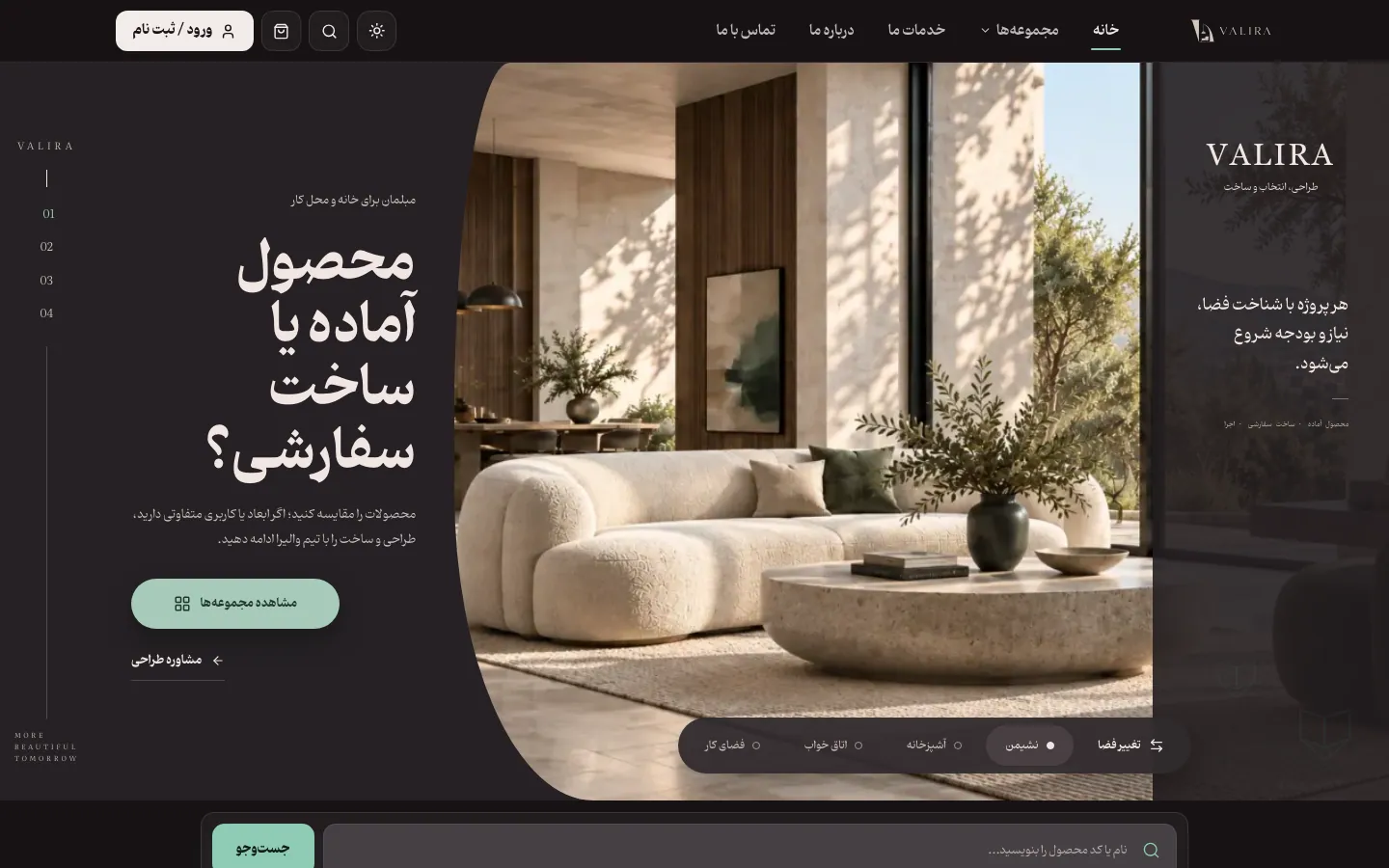
Valira
From choosing a product to furnishing the whole space.
- Online store
- Web app or website
- AI & automation
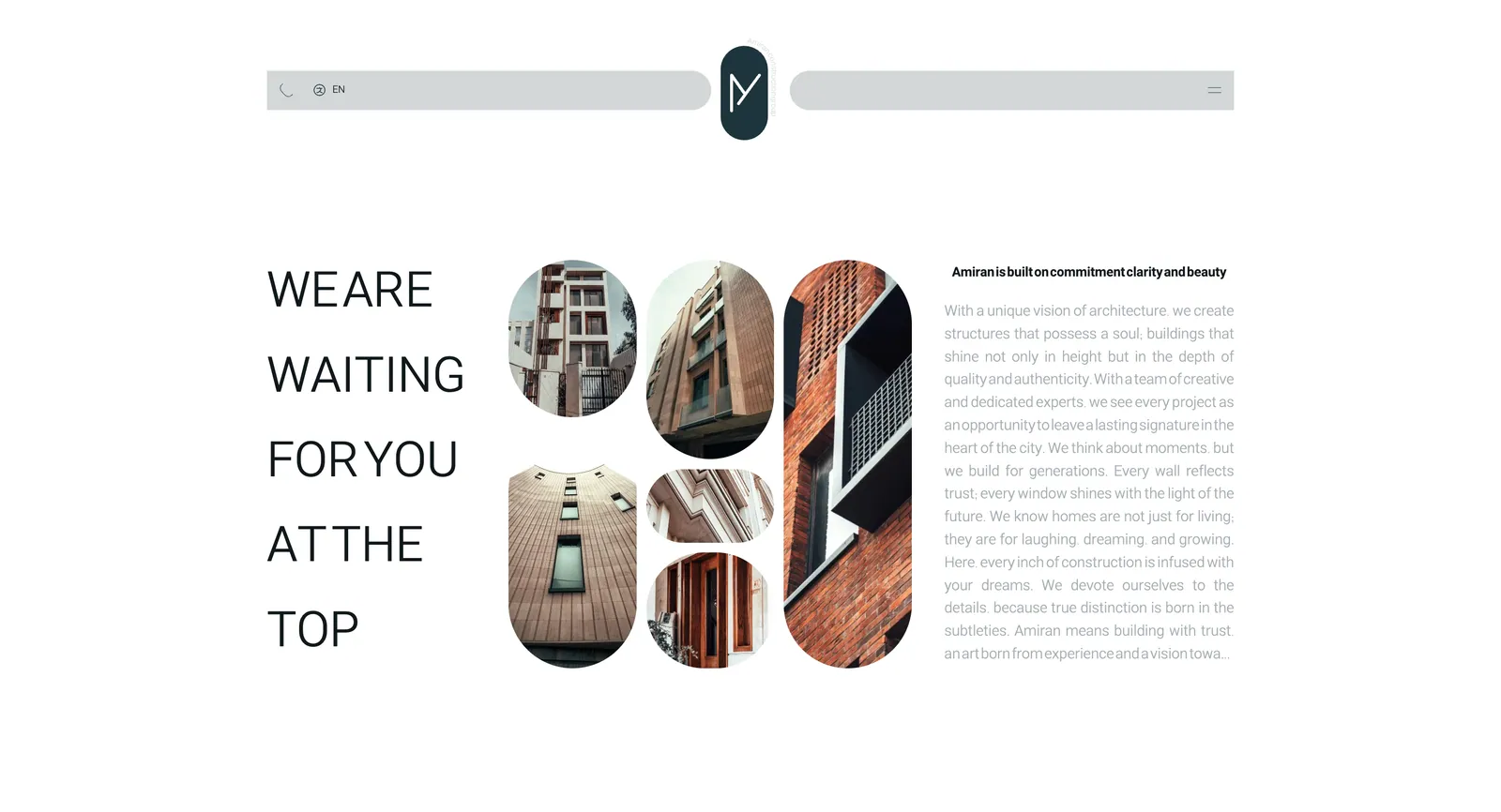
Amiran Group corporate website
Corporate branding
- Web app or website
- Product design
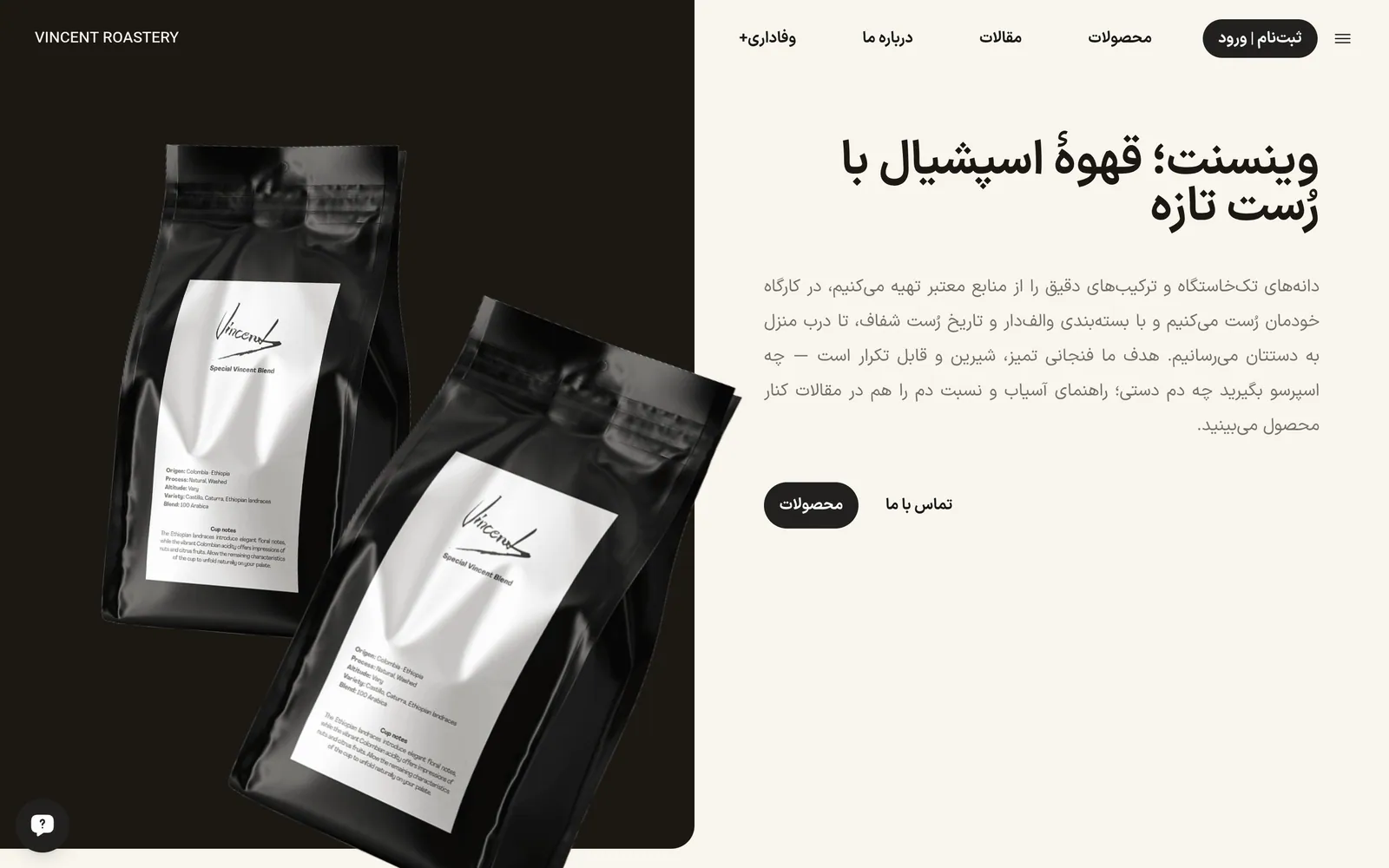
Specialty coffee roastery platform
Commerce & content
- Online store
- Web app or website
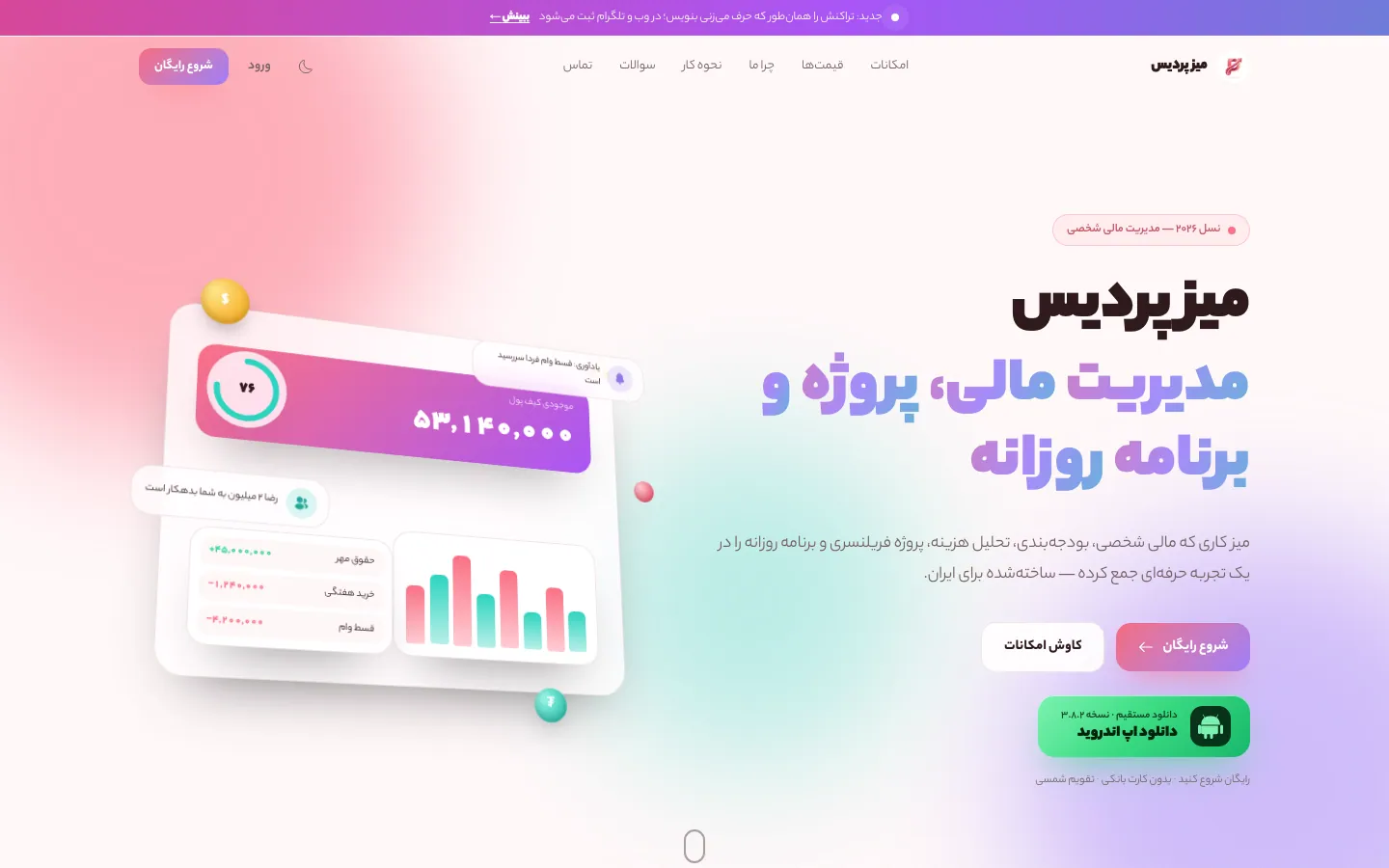
Paradise Desk
Money, projects and your day — in your own language.
- Web app or website
- Mobile app
- AI & automation
What drives the cost?
Website design cost depends on scope and complexity, not a flat rate. After a discovery call we give you a clear, phased estimate.
- The number of distinct page templates and how much content has to be written or migrated
- How many languages, and whether both right-to-left and left-to-right layouts are needed
- Fully custom design versus working from an existing brand design system
- Whether you need a content panel, blog, advanced forms or a CRM integration
- Migration from an old site, content transfer and preserving URLs and rankings
Frequently asked questions
How much does website design cost?
There is no single price for website design, because a five-page brochure site and a three-language corporate site with a content panel and blog are different projects. Cost is driven by the number of page templates, languages, how custom the design is, whether you need a CMS, and migration from an old site. Rather than comparing raw quotes, compare what you actually receive: do you own the source code, has speed been measured, is technical SEO done? The cheapest option often ends up costing more when it has to be rebuilt.
How long does it take to design a website?
Timelines depend more on how ready your content is and how quickly decisions get made than on coding. A small corporate site with finished copy moves quickly; a multilingual site with a content panel and a WordPress migration takes longer. We work in phases — discovery, design, build and launch — and you review a working version at the end of each one. If you have a fixed date such as a product launch, tell us up front so we can shape the first release around it.
Is a custom website better than WordPress?
WordPress is a reasonable choice for a personal blog or a very tight budget. For a corporate website that must stay fast, secure and credible, it usually grows into dozens of plugins and a heavy page builder, each update a small risk. A custom Next.js website contains only what you need, pages are prerendered, and the attack surface is far smaller. The upfront cost is higher, but maintenance, security patching and premature redesigns cost less over the life of the site.
Can I edit the website content myself after launch?
Yes. We build a panel around the editable parts of your specific site: page copy, articles, case studies, banners and contact details. Instead of a crowded dashboard with hundreds of settings, your team sees only the relevant fields, saves drafts and previews before publishing. On a multilingual website each language is edited separately. If the site is mostly static and rarely changes, Git-based content is a lighter option, and we will talk through which one fits your team.
What is the difference between a multilingual website and a translated one?
Translation converts text into another language; a multilingual website is built for several languages from the ground up. Each language gets its own URL, its own SEO title and description, and correct hreflang tags so search engines show the right version to each user. For Persian and Arabic the whole layout flips to right-to-left, the typeface is chosen for the script, and joined letters render without breaking. Automatic translation plugins tend to get exactly these details wrong, producing pages that neither read well nor rank.
Who owns the website's source code and domain?
You do. The domain is registered in your name from the start, and the full source code, server access, panel and third-party accounts are handed over at the end of the project. There is no proprietary lock-in or hidden dependency on us; any team that knows Next.js and TypeScript can pick up the work. We put this in the contract explicitly. If you want us to handle support and future development, that is your choice, not a condition.
Further reading
Why Your Company Needs a Custom Website—Not a Template
Templates promise cheap speed; serious brands need differentiation, trust, and a conversion path that matches how they sell. Judge the difference on business metrics—not demo galleries.
Why Serious Businesses Outgrow WordPress
WordPress is a strong starting point—until sales, traffic, and operational complexity turn plugin sprawl into real cost. Here’s how to know when a custom stack wins.
The Hidden Cost of Cheap Website Development
A rock-bottom quote rarely reduces cost—it hides it in rewrites, lost SEO, breaches, and internal hours. See the real math before you sign.