Ecommerce website development, from catalog to checkout
We build stores around how you actually sell, not around what a plugin allows. Fast, indexable, and run from an admin panel your operations team will want to use.
Ecommerce website development, for us, means building a sales system rather than dressing up a template. A good online store shows products fast, gets prices and stock right, hands every order cleanly to the payment gateway and the warehouse, and ranks in search. We build custom online stores with Next.js, React and TypeScript on the front and NestJS with PostgreSQL or MongoDB behind it, so every layer is testable, observable and owned by you.
WooCommerce is a reasonable way to start: cheap and quick to launch. The trouble begins when the catalog grows, when you need wholesale or tiered pricing, or when ten plugins collide and every update breaks something. At that point the right WooCommerce alternative is a custom store that carries only the features you need, with clean code, proper caching and speed you can see in Core Web Vitals and in conversion rate.
For Valira we built a furniture commerce platform with 93 pages and 198 endpoints: ready-made packages for home, office and clinic, a three.js 3D room planner, and AI-assisted catalog import from ZIP files that waits for human approval before anything goes live. For Valira Beauty we solved product variants and staged catalog import. We bring the same experience to your store, retail or B2B.
What we build
Custom storefront on Next.js
Server-rendered product and category pages with smart caching and optimized images, so the store is fast and fully indexable.
Store admin panel
Products, variants, stock, orders, discounts and staff roles in a panel designed for daily operator work, not for a demo.
Payment gateway integration
Local payment gateways and wallets wired in with idempotency keys and reconciliation, so no order is charged twice or lost.
B2B and wholesale commerce
Tiered pricing, minimum order quantities, quotes, company accounts and multi-step order approval for selling to businesses.
Catalog import and sync
Bulk import from spreadsheets or ZIP files, with AI-assisted attribute extraction and a human approval step before publishing.
Ecommerce SEO
Clean URLs, product schema, sitemaps, internal linking between categories and crawl-budget control for large catalogs.
How we work
- 01
Map sales and data
We model products, variants, pricing rules and the order flow with your sales and warehouse teams; the data is designed before any page.
- 02
Design the purchase path
From category page to checkout, with the fewest steps and the clearest choices, optimized for mobile and right-to-left from day one.
- 03
Build, connect, migrate
We build the store and admin, connect payments with real test transactions, and if you are leaving WooCommerce we move products, customers and URLs with redirects.
- 04
Launch and grow
We ship with Docker and monitoring, measure speed and errors, and keep working on SEO, conversion and operations tooling after launch.
Related work

Valira
From choosing a product to furnishing the whole space.
- Online store
- Web app or website
- AI & automation

Valira Beauty
Your beauty ritual.
- Online store
- Web app or website
- Product design
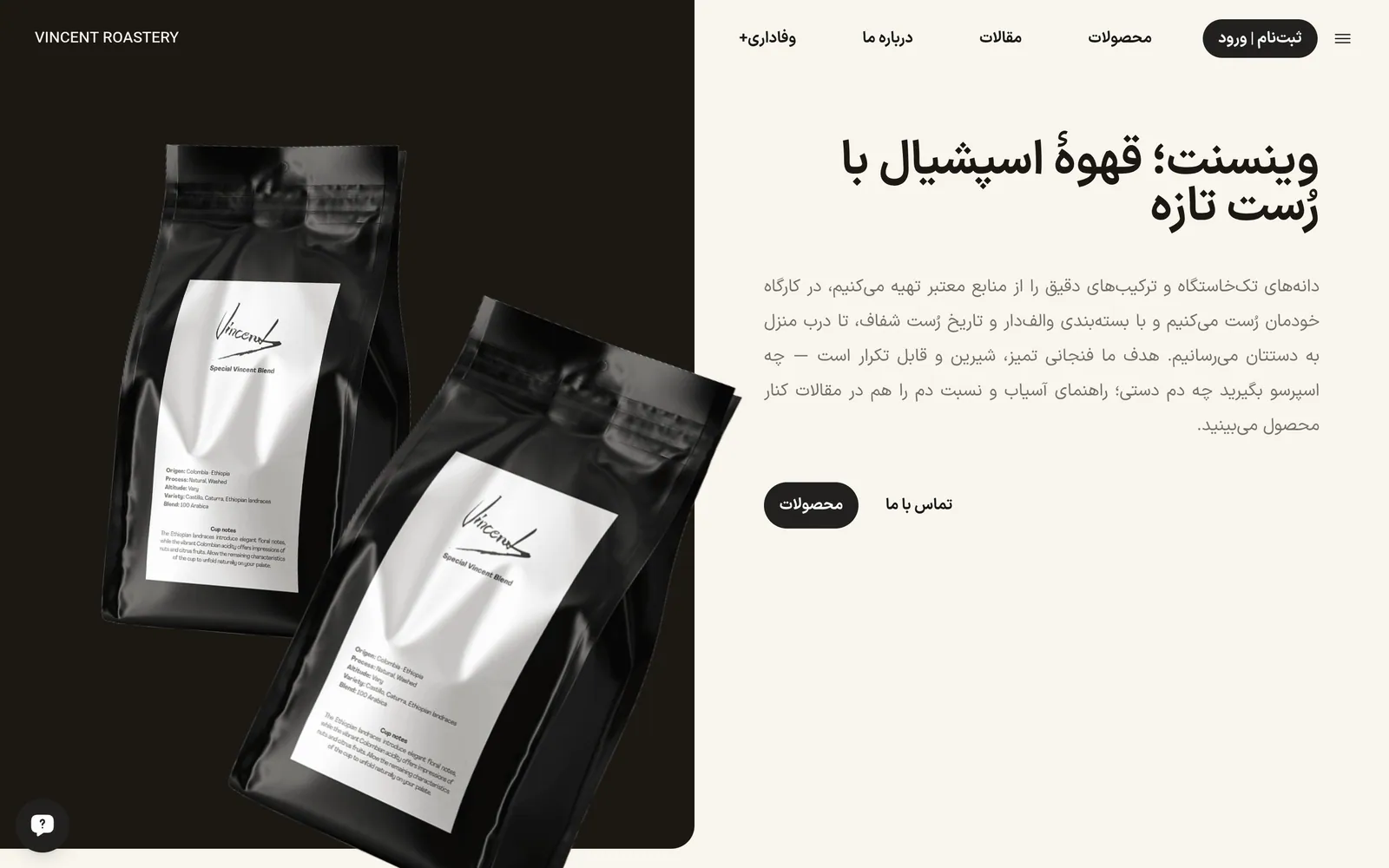
Specialty coffee roastery platform
Commerce & content
- Online store
- Web app or website

Cafe discovery & online menu platform
Local marketplace
- Online store
- Web app or website
What drives the cost?
We scope the cost of an ecommerce website once we understand your catalog and sales process, because two stores that look alike can run on very different logic.
- Catalog size and complexity: product count, variants and filterable attributes
- Pricing rules: discounts, wholesale prices, customer tiers and B2B terms
- Integrations: payment gateways, accounting, inventory, shipping and SMS
- Migration from WooCommerce or a legacy system while preserving SEO rankings
- Special features such as a 3D planner, multiple languages or AI-assisted catalog import
Frequently asked questions
How much does an ecommerce website cost?
There is no honest fixed number. The cost of an ecommerce website depends on catalog size, pricing rules, the number of integrations and whether you are migrating. A store with a few dozen simple products and one payment gateway is a very different job from a B2B store where every customer sees different prices and orders flow into accounting. We start with a discovery session, write the scope down, and then give a phased estimate so you know what each capability costs and what can wait for a later phase.
Should I build a custom online store or use WooCommerce?
If your catalog is small, your sales process is standard and the budget is tight, WooCommerce can be the sensible choice. A custom online store pays off when speed and SEO are critical, the catalog is large or complex, you need wholesale or tiered pricing, or you are tired of plugin conflicts and security patches. Upfront cost is higher, but the code is yours, every change is predictable, and a plugin update no longer stops orders.
Can I move my ecommerce website off WooCommerce without losing SEO?
Yes, if the migration is planned. We move products, categories, customers and order history, pull the full list of indexed URLs from Search Console and the sitemap, and map every old address to its new equivalent with a 301 redirect. Titles, meta descriptions and product schema are preserved or improved. After launch we watch crawl errors and ranking changes for several weeks so any problem is caught and fixed early.
How does payment gateway integration work?
We connect the store to the payment gateways and wallets your customers use. The hard part is not the connection but the failure cases: a customer closing the tab mid-payment, a late callback from the gateway, or a duplicated request. We use idempotency keys, server-side verification and periodic reconciliation so no order is charged twice and no payment is left without an order. We have shipped multi-provider payments before, including ZarinPal and the Bale wallet in Hamdor.
What makes B2B ecommerce different?
In B2B ecommerce the buyer is an organization, not a person. Prices may differ per customer or customer group, there are minimum quantities and volume discounts, several people from one company buy under different roles, and an order may need a manager's approval or a formal quote first. Payment is often on credit or in installments. Off-the-shelf plugins usually handle this logic poorly, which is exactly where a custom store earns its cost.
When should ecommerce SEO start?
On the day the store is designed, not after launch. Category structure, URL shape, how filters and duplicate pages are handled, product schema and load speed are all architecture decisions, and fixing them later is expensive. We server-render pages so search engines see full content, generate dynamic sitemaps, keep worthless filter combinations out of the index, and design internal links between categories and related products.
Further reading
WooCommerce vs Custom Next.js Ecommerce
A decision-focused comparison of WooCommerce and a Next.js storefront on cost, speed, checkout flexibility, and scale readiness.
Ecommerce Checkout Conversion Engineering
Checkout is where traffic becomes revenue—or dies. From fewer fields to recoverable payment failures, an engineering checklist to raise completion rates.
Build vs integrate payment providers
Compliance risk. A practical guide with a real scenario and execution checklist for Build vs integrate payment providers.